Quick Summary: The best Indian credit card for daily spending depends on your monthly mix, not just the headline cashback rate. HSBC Live+ offers 10% cashback on dining, groceries, and utilities (capped at ₹1,200 monthly), while Cashback SBI Card gives 5% on eligible online spends and 1% offline. Always check monthly caps, category exclusions like fuel and rent, and annual fees, since a lower-rate card with fewer restrictions can beat a higher-rate one. CreditCardHunt's comparison helps you match cards to your actual spending patterns. A grocery run, a food order, and a bill can earn very different returns on the same card. Most people chase headline cashback and skip the fine print on eligible merchants, caps, and fees. Among the best Indian cards, HSBC Live+ suits heavy dining and grocery spend, while Cashback SBI Card fits online shopping. This comparison from CreditCardHunt helps you pick from the best Indian cards for daily spending based on your monthly mix.
HSBC Live+ vs Cashback SBI Card: At a Glance
| HSBC Live+ Credit Card | Cashback SBI Card | |
|---|---|---|
| Reward structure | 10% in listed categories; 1.5% on most other eligible spends | 5% online and 1% offline on eligible spends |
| Everyday category fit | Dining, food delivery, groceries, shopping, and utilities | Eligible online shopping and general offline purchases |
| Reward limits and exclusions | 10% category cashback capped at ₹1,200 monthly; exclusions apply | Eligible spends only; utilities, fuel, rent, and other exclusions apply |
| Annual fee | ₹999; waived on annual spends above ₹2 lakh | ₹999; renewal fee reversed at ₹2 lakh annual spend |
| Best for | Regular eligible grocery, dining, delivery, and utility spend | People with substantial eligible online spending |
How HSBC Live+ Credit Card and Cashback SBI Card Compare
HSBC Live+ Credit Card
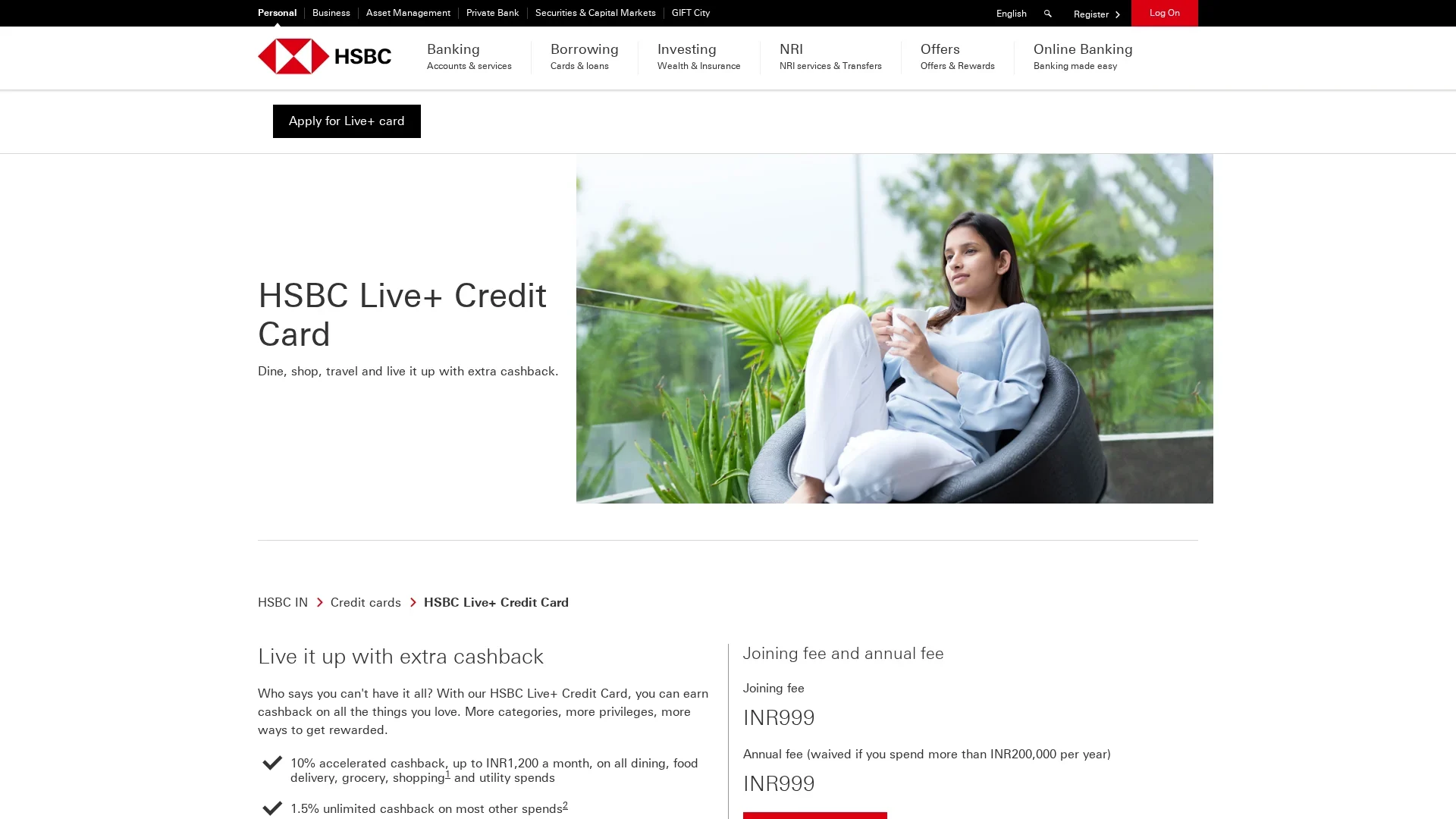
This card rewards everyday spending on dining, food delivery, groceries, shopping, and utilities. It suits people whose monthly budget runs through these categories. Among the best Indian cards for food-led spending, it offers 10% cashback in listed categories (capped at ₹1,200 monthly) and 1.5% elsewhere.
Key strengths
- 10% cashback on eligible dining, groceries, and utilities
- ₹999 fee waived above ₹2 lakh annual spends
Cashback SBI Card
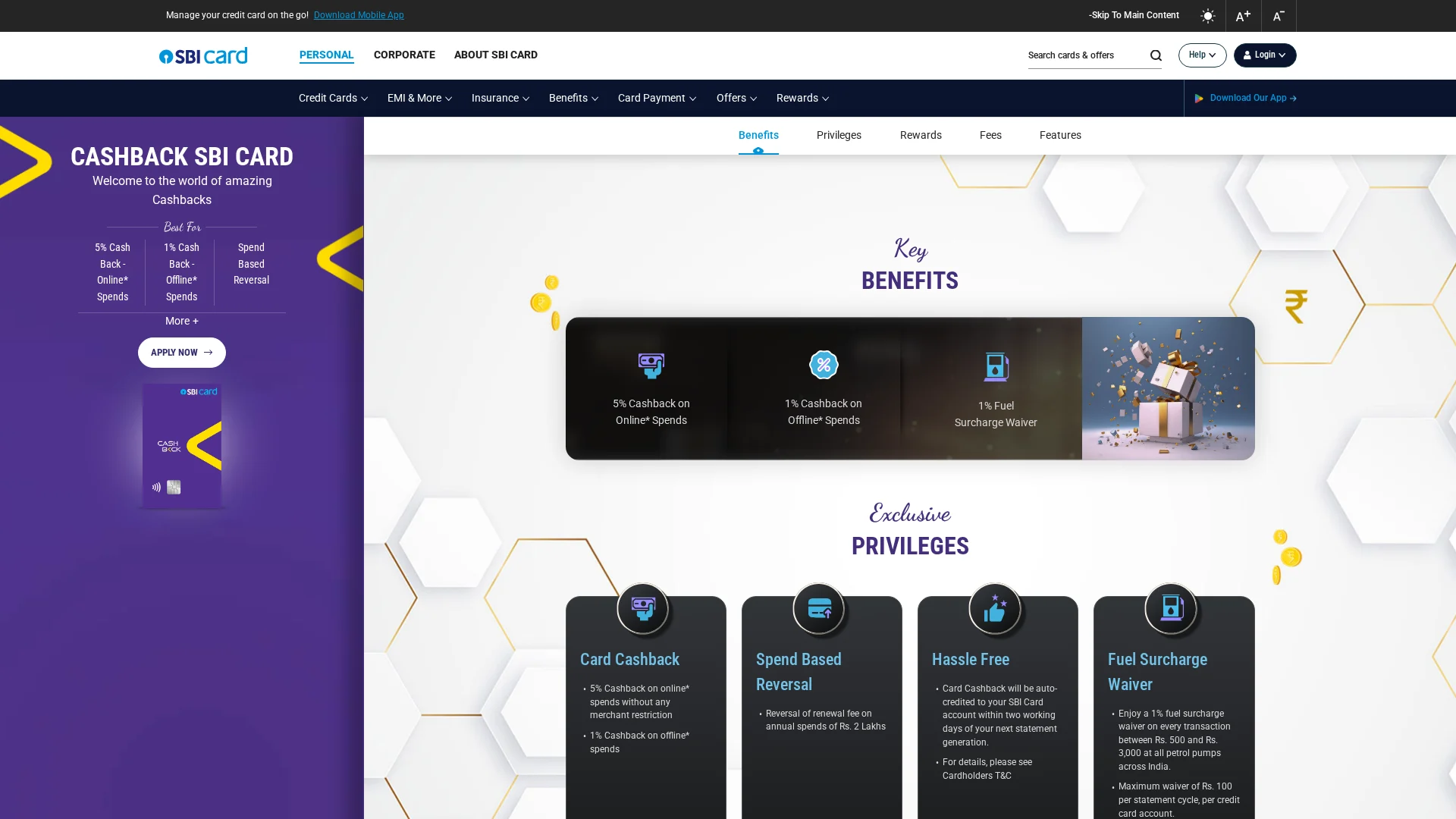
This card pays more online than offline: 5% on eligible online spends and 1% on eligible offline ones. It fits shoppers who buy most things through apps and websites. Utilities, fuel, and rent are excluded, so check the list first.
Key strengths
- 5% on eligible online purchases
- Renewal fee reversed at ₹2 lakh annual spend
How Their Cashback Fits Your Everyday Spending
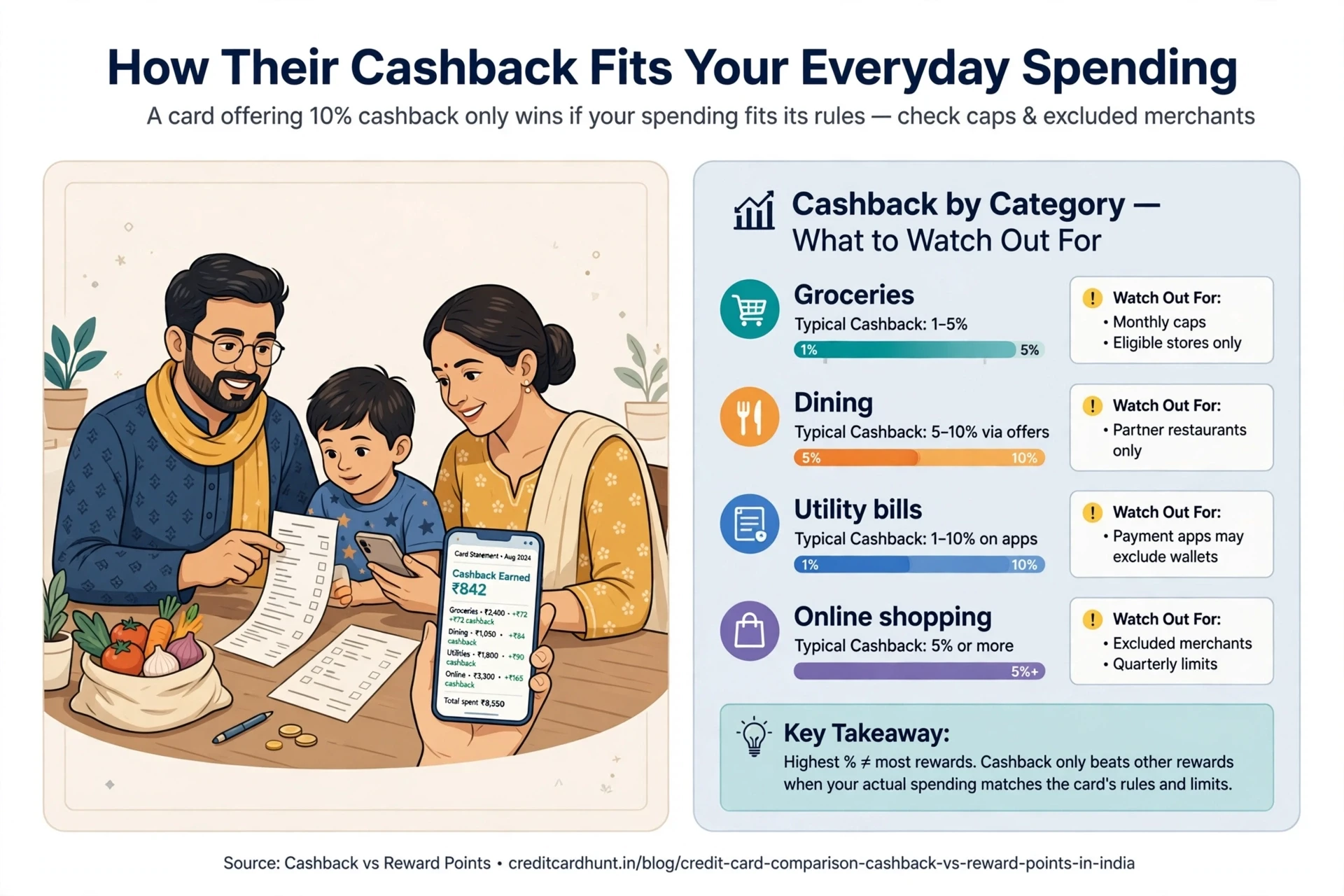
The best cashback card for you depends on where your money goes each month. Groceries, dining, and bill payments eat up most household budgets, so cards that reward these categories pay you back faster.
Here is how the main spending types differ:
| Category | Typical Cashback | Watch Out For |
|---|---|---|
| Groceries | 1-5% | Monthly caps, eligible stores only |
| Dining | 5-10% via offers | Partner restaurants only |
| Utility bills | 1-10% on apps | Payment apps may exclude wallets |
| Online shopping | 5% or more | Excluded merchants, quarterly limits |
Groceries, Dining, and Bills
Grocery cashback looks generous but often carries a cap, say 5% up to ₹1,000 per month. Dining rewards shine on partner apps and restaurant chains. Bill payments usually earn flat cashback through specific platforms.
Check three things before picking: the eligible category list, the monthly or quarterly cap, and any excluded merchants. A card advertising 10% cashback can beat a 5% card only if your actual spending fits its rules. Our cashback vs reward points comparison explains when cashback wins outright.
Fees, Caps, and the Fine Print That Change the Value
A 5% cashback card can beat a 10% card once caps and fees enter the picture. Read the terms before you apply.
Watch for four things:
- Monthly caps: many cards stop paying rewards after Rs 1,000-2,000 of cashback per month.
- Category exclusions: fuel, wallet loads, rent, and utility payments often earn nothing.
- Annual fees: only worth it if your spending clears the fee-waiver threshold.
- Redemption rules: some rewards lapse or lose value on statement credit.
A card with a Rs 500 fee but no cap often wins for heavy spenders. For light spenders, a no-fee card usually pays more overall. Compare the full fee and reward terms side by side, not just the headline rate.

Which Card Should You Choose for Daily Spending?
A Quick Decision Checklist
Match the card to where your money actually goes, not to the biggest headline number.
- Groceries dominate your bills? Pick a card with a dedicated grocery category and check the monthly cap.
- Dining and online shopping? Choose a card that rewards these spends and excludes nothing you buy often.
- Utility bills and fuel? Confirm these categories earn rewards. Many cards pay zero on them.
- Low monthly spending? Skip high annual fees unless the waiver is easy to hit.
- Hate tracking? Plain cashback beats complex reward points every time.
Check exclusions, caps, and the annual fee before you apply. Comparing cards side by side on CreditCardHunt makes this fast.
Ready to pick a card that rewards your daily spends? Compare 100+ cards side by side at CreditCardHunt and find your best match today.